















Air Source Heat Pumps (ASHPs) continue to grow in popularity as a viable, green alternative to boilers that can provide both heating and hot water for a property. That said, we know from experience that understanding exactly how they work isn’t widespread.
So, how do they work? How much do they cost to run? And what are the advantages and disadvantages of this type of system? Let us catch you up…
How do they work?
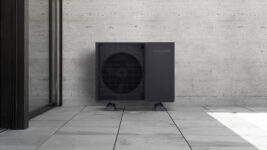
ASHPs harness solar energy that has warmed the air, absorbing it as it passes through the ASHP, even at low ambient temperatures, and transferring that heat into a fluid. As that fluid passes through a compressor, the temperature of the fluid is then increased. Finally, the higher temperature heat is then transferred to the heating and hot water system in the house. This all happens inside a unit which is mounted on the floor, or in some cases, hung from the wall, outside of the building. ASHPs are normally around 1 metre high, 1.2 metres wide, and can be 0.3 to 0.5 metres deep. They are also very heavy, which is also a very important consideration when siting a unit. To allow for adequate air flow, there must also be a 300mm gap between the back of the unit and the wall that it stands against.
To get the most from an ASHP, it is extremely important that the heating system is considered, as the suitability of the radiators, underfloor heating, and pipework, can have a massive impact on how the ASHP performs. Generally speaking, the lower the flow temperature of the heating system, the better the heat pump will perform. This may mean that larger radiators and possibly larger pipework are required. Underfloor heating could be utilised as an alternative, if possible.
Contrary to popular belief, ASHPs are suitable for all buildings, new and old. This could be a new build project, a 1970s maisonette, a stone cottage, or a Victorian town house! The important thing is that a correctly specified heat pump and system design are applied.
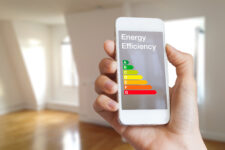
Even when the outdoor temperature is as low as -15°c, ASHP’s continue to heat the home, producing around 2-4 kWh of heat energy for every 1 kWh of electricity required to power the unit. Heat pumps should always provide more energy than they consume. Heat pump efficiency is usually referred to as Coefficient of Performance or COP. This is calculated by dividing the output of energy by the input of energy, for example: 3kW output divided by 1kW input = a COP of 3.0 – also expressed as 300% efficient.
How much do they cost to run?
As with any heating and hot water system, the running costs depend entirely on how efficiently your system has been designed and how it is operated. Running costs are determined by several factors such as the size of your home, how well insulated it is, how warm you want your house to be, and most importantly, how you use the system.
Other factors include the type and condition of your heating system, the suitability of your pipework, which controls have been installed, and which electricity tariff you use.
You could potentially save per year the following by replacing your existing system with an ASHP:
- £290 from an old (G-rated) gas boiler
- £280 from an old (G-rated) oil boiler
- £1,200 from old electric storage heaters
- £650 from an old (G-rated) LPG boiler
With old and inefficient systems like these, an ASHP could work out cheaper and offer you the option of saving money.
What are the advantages and disadvantages?
As with any heating and hot water system, there are advantages and disadvantages. The successful use of an ASHP depends on a variety of factors, not least the efficiency of the building itself. It’s important to consider the individual situation; location, building size and specific requirements. ASHPs require little maintenance, however, they aren’t always the perfect solution.
Let’s look at the pros and cons:
Pros
- Boiler Upgrade Scheme:
If you live in England or Wales, you could be eligible to access £7,500 of Government funding up front, towards the cost of your installation. - Lower fuel bills:
Especially if you’re replacing conventional electric heating or an older fossil fuel boiler, your running costs could be less with a heat pump. - Heating and water:
You can keep your home warm 24/7, 365 days per year, with as much hot water as you need. - Easy Installation:
ASHPs are often easy to install and can connect to an existing heating system, and in some cases, can free up space in your kitchen or utility room where a boiler is removed. - Lower carbon emissions:
Heat pumps produce zero carbon dioxide at the point of use, making them much more environmentally friendly than fossil-fuelled boilers. - Low maintenance:
With regular servicing, you can expect the lifespan of a heat pump to be 20 years or more, with very little maintenance and intervention. - Be in control:
There are lots of options for remote access and monitoring of your system, so you can be fully in control from anywhere, with app-based software.
Cons
- Semi-renewable:
Although heat pumps are capable of harnessing thermal energy from the air, they still require electricity to run, meaning they are not 100% renewable. While the electricity required to run the unit still produces carbon dioxide, cleaner, greener energy sources such as wind, solar, and nuclear power are on the increase. - Lower heat:
Heat pumps are classed as ‘Low Temperature Heating’ systems. This means that your existing radiators, underfloor, and pipework may not be suitable. A full heat loss and technical survey is required prior to any heat pump installation. This assessment will provide a detailed report regarding energy usage and running costs, as well as recommended system upgrades and performance data. - Space:
A suitable location is required to site the heat pump around the exterior of the property. Heat pumps can be located away from a property, e.g. behind the garage, or at the bottom of the garden, but additional groundwork may be necessary. Inside the property, although a boiler is not required, heat pumps do need space for a storage cylinder for hot water, along with other essential components which are often sited in an airing cupboard, loft, or garage. - Noise:
Although heat pumps are very quiet, they are not silent so consideration must be given to the position of the heat pump and the impact that it may have on neighbouring properties. A sound assessment must be carried out as part of the technical survey.
Air Source Heat Pumps are becoming increasingly popular and are catching the attention of more and more homeowners in recent years. Not only because they use renewable technology as a viable alternative to boilers, but also because of the current Boiler Upgrade Scheme which can cover most of the cost of the installation
As with any heating and hot water system, it is essential that good system design and specification is applied. The ASHP alone is not responsible for the efficiency of the system. The heating system and insulation of the property, how the system is piped, and how the system is controlled, are all key factors in maximising the efficiency of a heat pump system.


